Project: NU-Start

  • Program Syncing

    Program Syncing

    Program Syncing

    Transforming authoritative data into reusable content.

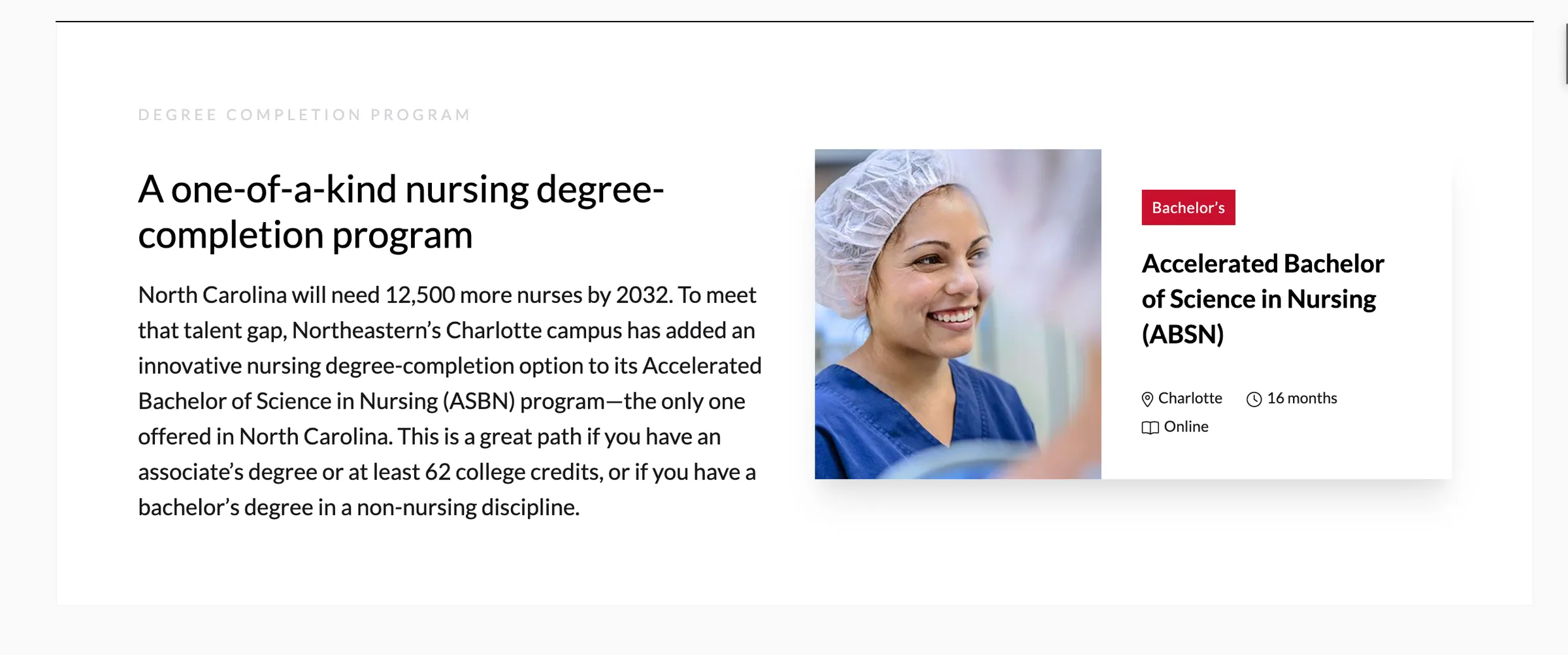
    Academic program information already existed within university systems, but marketing websites still needed program pages, archives, landing pages, and other content experiences built around that data. Maintaining those pages manually created unnecessary work and increased the risk of inconsistent information.

    To address this, I developed a custom integration that synchronized validated program data into WordPress and represented each program as a native content type within the platform. Rather than treating program information as isolated pages, the system treated programs as structured content that could be reused throughout the website.

    As new programs were introduced or existing programs changed, the system automatically generated and maintained program pages using Gutenberg templates and synchronized data. Institutionally managed content remained aligned with official university records, while editors could focus on the marketing and editorial content surrounding each program.

    Because programs existed as native content within the platform, the same data could power archives, landing pages, featured content sections, and other content-driven experiences throughout NU Start. A single synchronization process maintained accurate information while reducing duplication and ongoing editorial effort across dozens of websites.
  • Featured NGN Stories

    Featured NGN Stories

    Featured NGN Stories

    A single source of truth for university news.

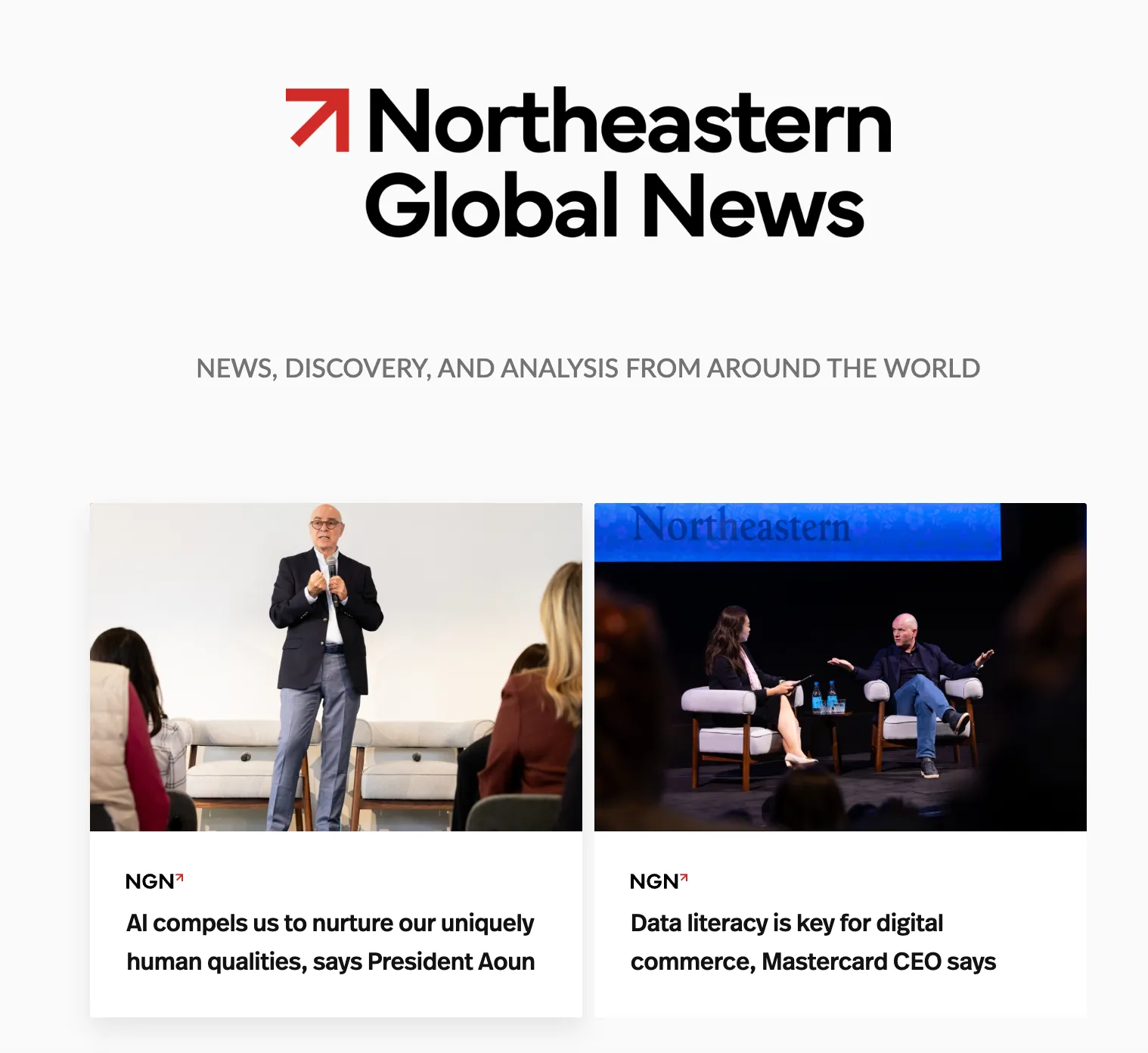
    The Featured NGN Stories block began with a simple editorial challenge. Some campus teams wanted to feature stories from Northeastern Global News (NGN) on their websites, but keeping that content current often meant manually recreating and republishing stories across multiple platforms.

    Rather than duplicating content, I worked with the NGN team’s lead developer to integrate directly with their public API. The goal was to surface NGN content within NU Start while preserving a single source of truth for publishing and maintenance.

    What made the project particularly successful was not the complexity of the integration, but the foundation it was built upon. By leveraging the content presentation framework already established through the Dynamic Content Grid system, the integration required very little new infrastructure. Content could be retrieved from an external source, mapped into existing presentation patterns, and displayed through a familiar editorial experience.

    Editors could add the block to a page, configure a small number of display options, and automatically surface current NGN stories without ongoing maintenance or manual content duplication.

    The project demonstrated one of the primary goals of NU Start: invest in shared systems that make future solutions easier to build. What could have become a custom integration for a single use case instead became a reusable feature that continues to power content experiences across Northeastern websites.

  • Dynamic Grid System

    Dynamic Grid System

    Dynamic Grid System

    Building a Gutenberg interface for the platform’s content architecture.

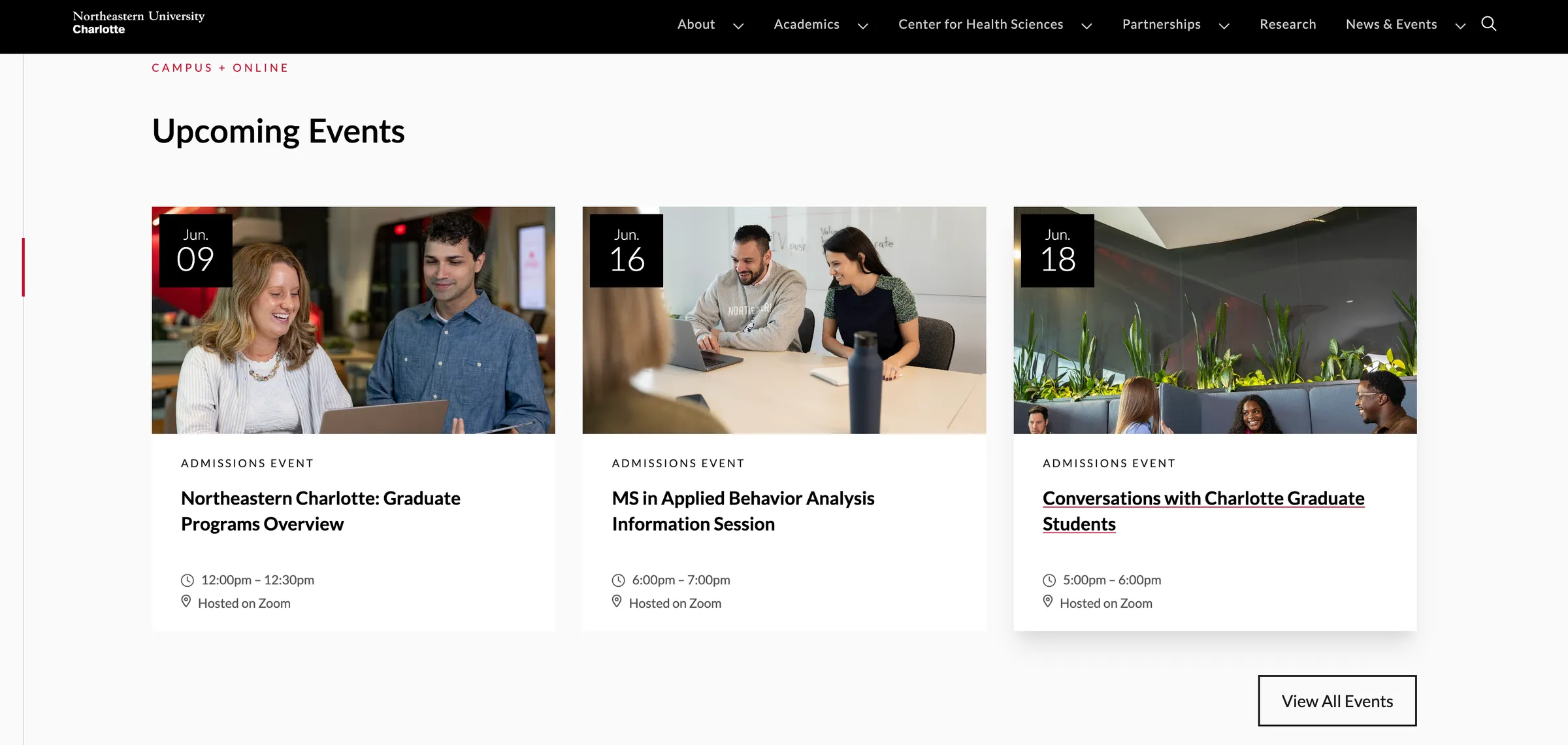
    Many of the websites built on NU Start relied on content-driven experiences such as news archives, event listings, academic programs, faculty profiles, campus information, and landing pages. While these experiences served different audiences and appeared in different layouts, they often relied on the same underlying capabilities: querying, filtering, organizing, and presenting content.

    What began as a Gutenberg interface for WordPress’s content querying capabilities evolved into a reusable framework for building content-driven experiences across the platform. Editors could build rich content experiences without custom development, while developers could continue extending the system as new requirements emerged.

    Behind the scenes, a shared query engine handled content selection, filtering, pagination, and aggregation. Presentation templates controlled how results were displayed, allowing the same underlying content to power many different experiences.

    As adoption grew, the framework expanded to support numerous content types including news, events, programs, people, campuses, colleges, and institutional content. Individual sites could override presentation templates within their own child themes, allowing local customization while continuing to benefit from improvements made to the shared platform.

    The Dynamic Content Grid became one of the foundational systems within NU Start. More than a single feature, it demonstrated a broader principle that guided the platform: build flexible systems that can grow alongside the people using them.